Hadar
HADAR :
(Beta Centauri (β Centauri / β Cen), also known as Hadar or Agena, is the second brightest star in the constellation Centaurus and one of the brightest stars visible in the night sky.)
Shining across billions of galaxies in the Universe, stars surpass human comprehension. On a clear night, the stars we perceive through telescopes are so distant that their light has taken millions, sometimes billions of years to reach us. For centuries, stars have guided travelers, sailors and dreamers, becoming symbols of orientation, imagination and projection toward the unknown.
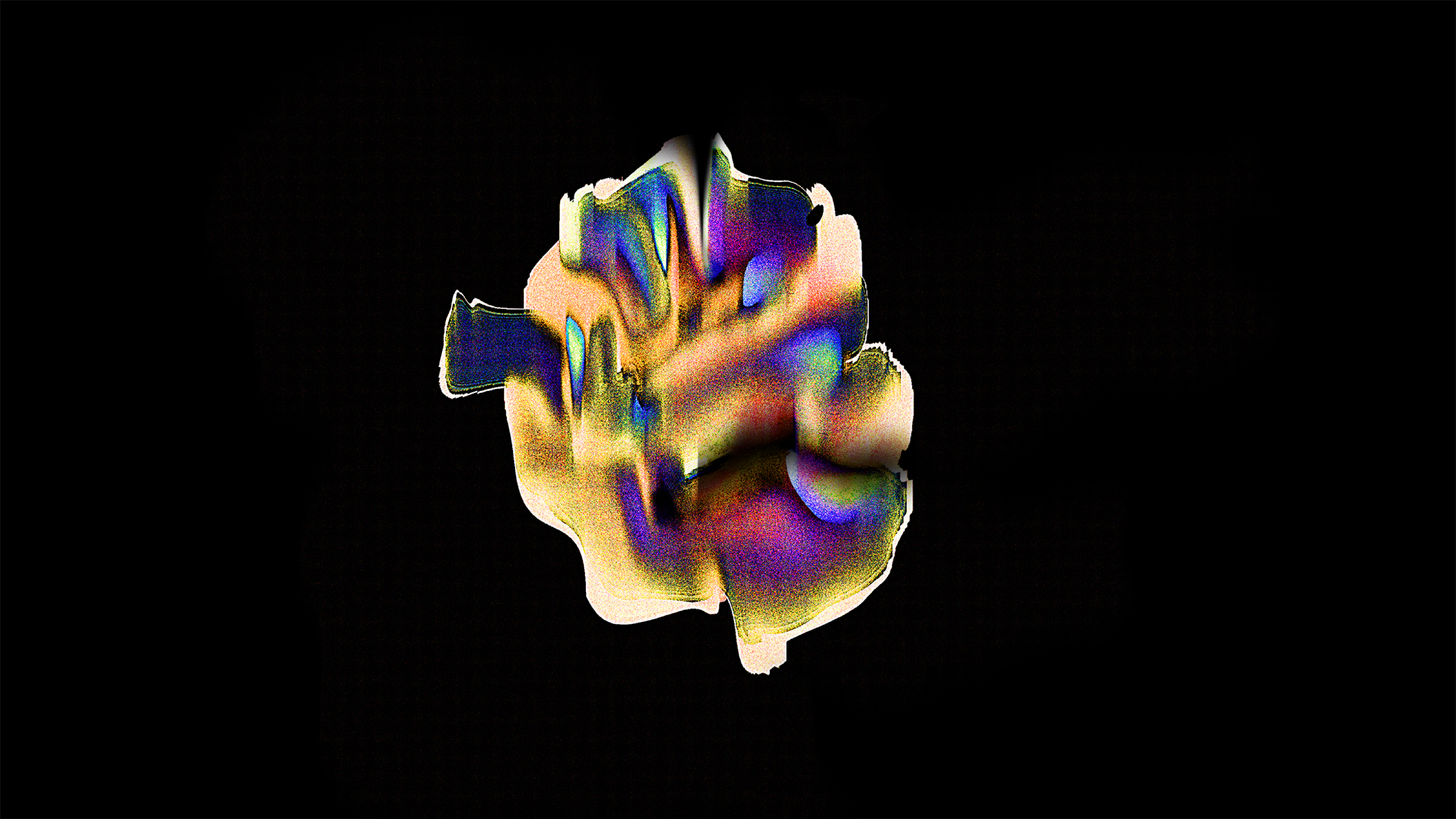
Created in 2017, Hadar draws a parallel between this fascination for the stars and the dizzying acceleration of digital technologies. At that time, HD was only beginning to become widespread online, while 2K and 4K resolutions were announced as the next technological standards. With Hadar, Arnaud Laffond chose to push this logic toward excess by creating a video artwork in 32K resolution, an almost inaccessible format at the time, impossible to properly display on most contemporary devices and online platforms.
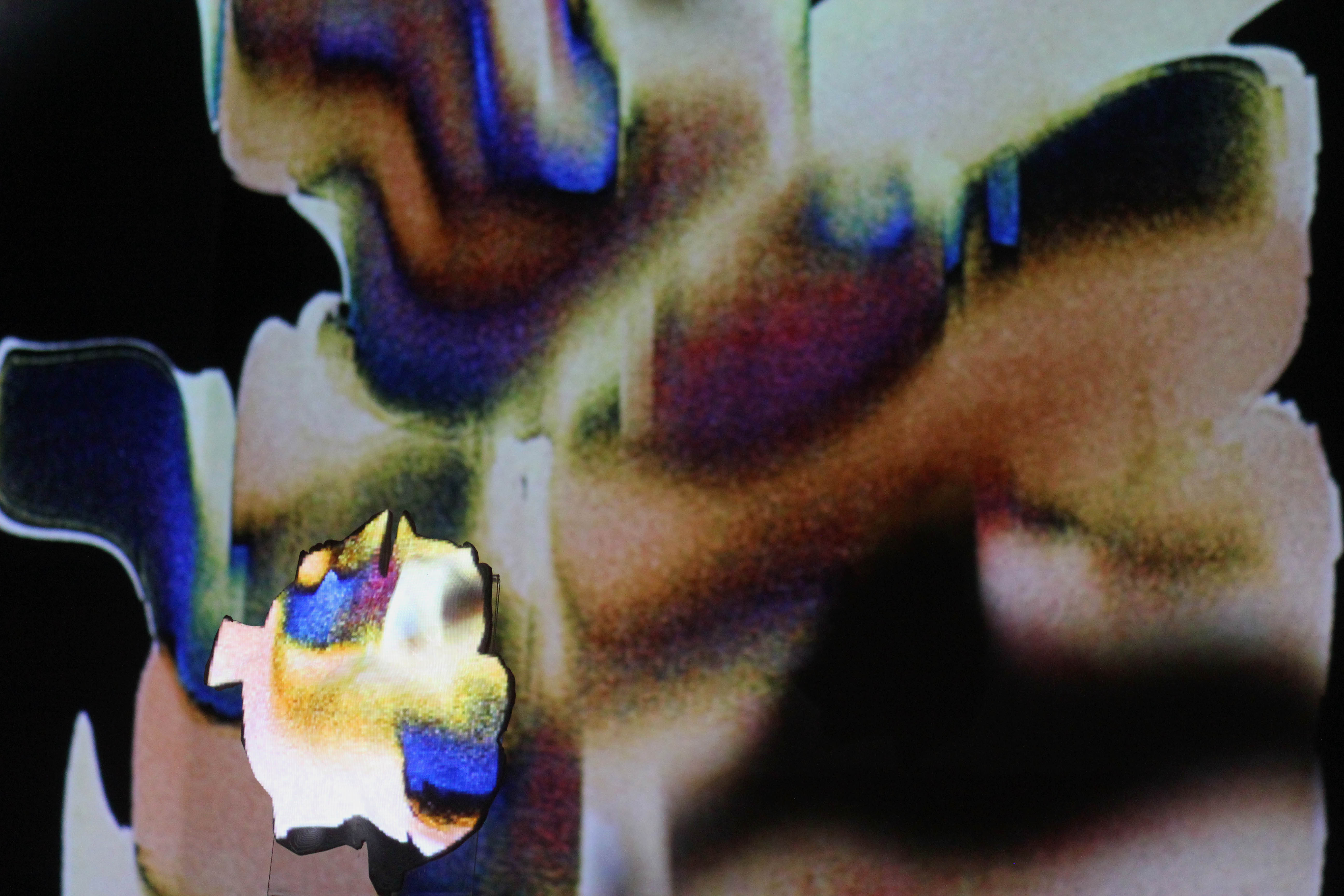
This technical exaggeration becomes an artistic gesture. The video itself emerges from the artist’s research into digital forms, colors and abstract matter, creating immersive visual environments where light appears organic and cosmic. Inspired by the formation of stars, the work generates evolving luminous structures, like digital celestial bodies in perpetual mutation. The resolution itself becomes symbolic: a technological prediction, a glimpse of an image quality that did not yet truly exist in everyday life.
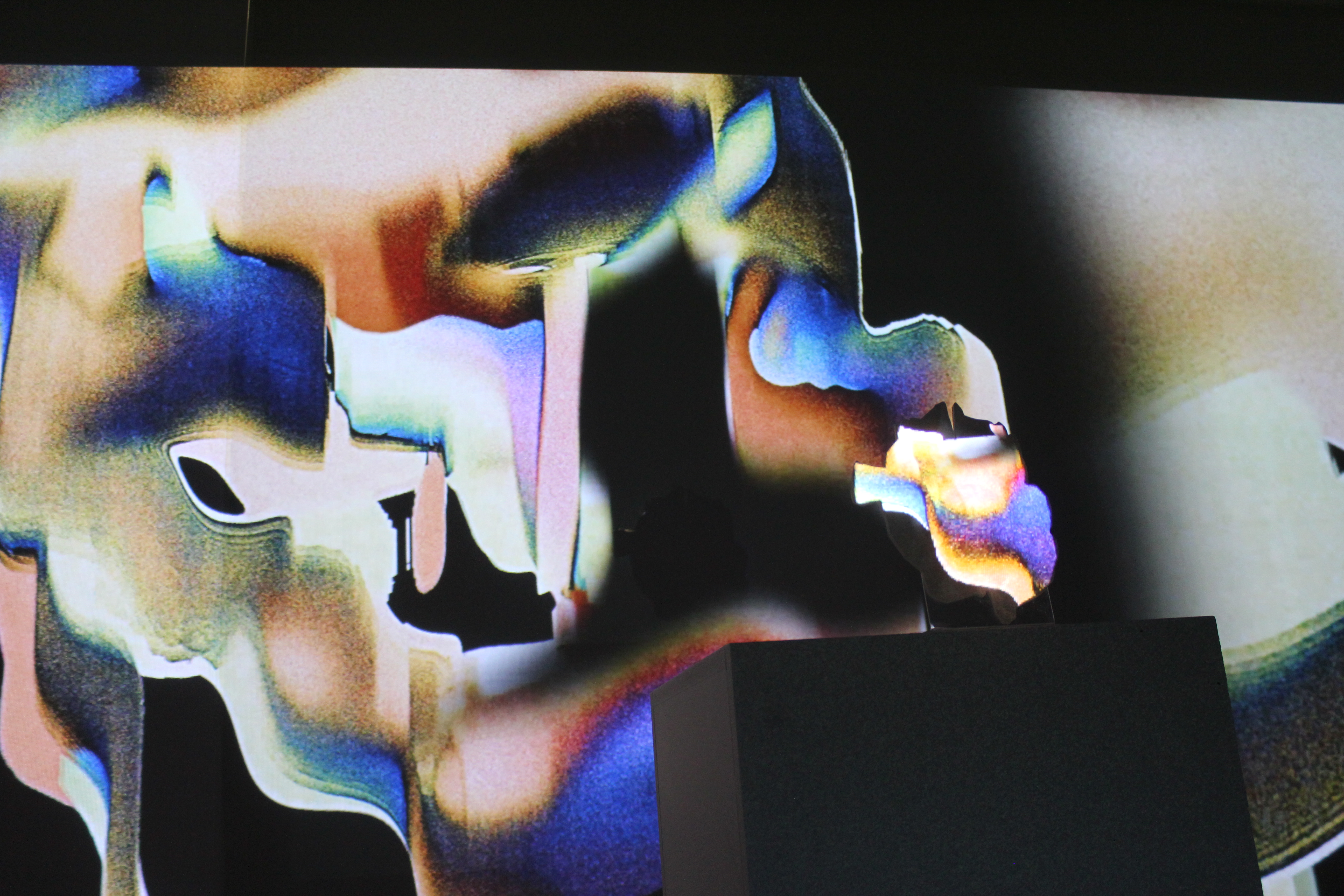
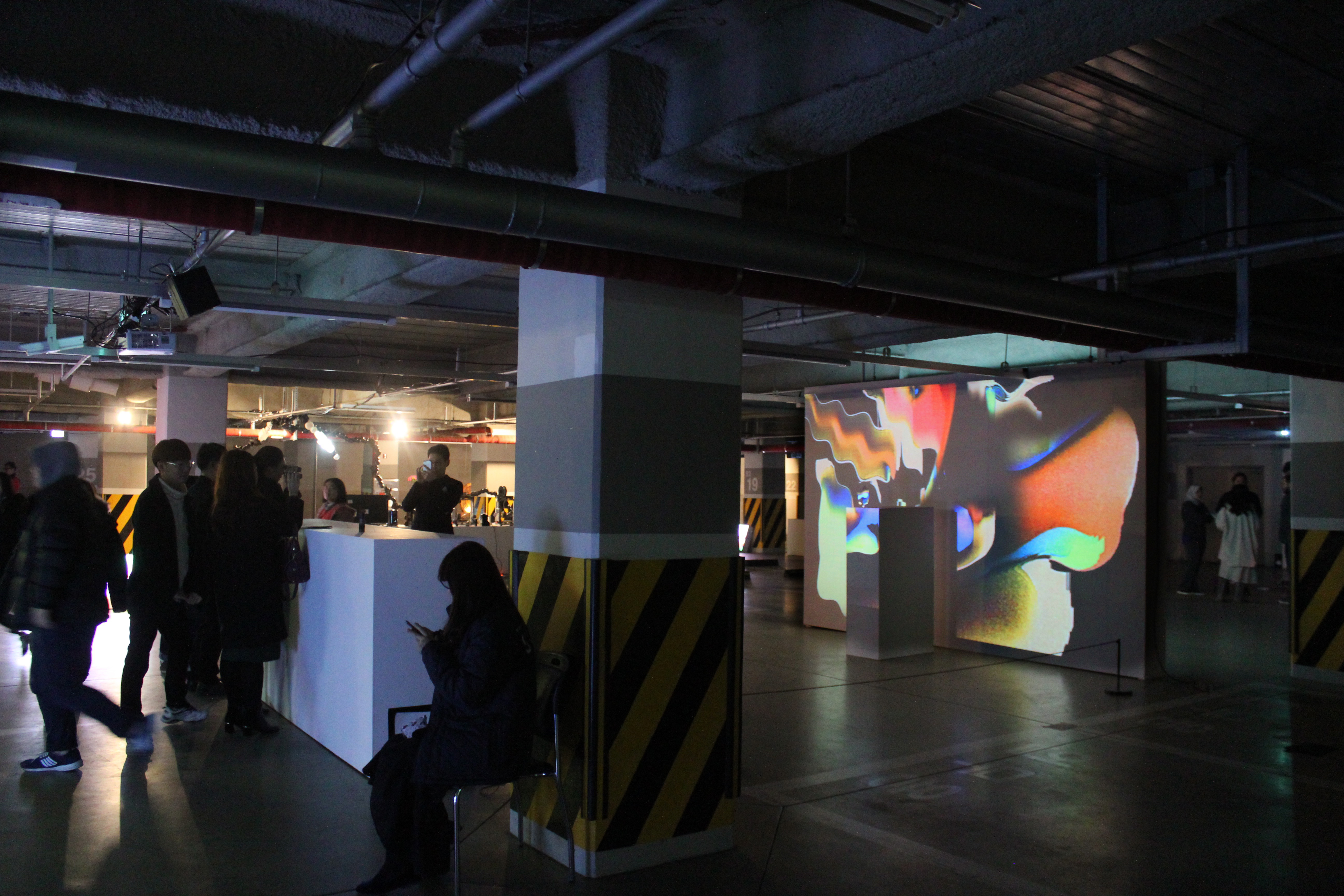
The installation consists of a large-scale video projection combined with a 3D-printed sculpture placed at the back of the space. Through video mapping, the sculpture becomes an extension of the projected image, giving physical volume to the digital universe. Depending on the exhibition context, several sculptural forms can coexist, representing different fragments or stages of the visual evolution of Hadar.
Yet the audience cannot approach the work directly. Visitors remain positioned at the entrance of the installation and are invited to observe the details using binoculars provided in the space. This device references astronomical observation: like people contemplating stars while imagining the future, viewers here observe a form of digital prediction, a possible future of image technologies and virtual perception.
A paradox nevertheless emerges. When observing the stars, we are in fact looking at the past, since their light takes immense amounts of time to reach us. Hadar plays with this ambiguity between anticipation and obsolescence, between futuristic fantasies and already outdated technologies. The installation questions our constant pursuit of resolution, performance and innovation, while transforming technological excess into a contemplative and poetic experience.
Captation Adaf Festival _ 2017
Athènes GR
2017.adaf.gr/
Music : Jean Emmanuel Rosnet
soundcloud.com/boa_ephemera